

Ship Engineering
When a ship is in seawater, its metal structure forms an electrochemical corrosion system with the seawater. Because seawater contains a large amount of salt and other electrolytes, countless tiny galvanic cells will form on the metal surface, causing the metal to undergo oxidation reactions and be corroded. Ship corrosion can lead to a reduction in the structural strength of the hull, affecting the safety and service life of the ship.
In ship engineering, cathodic protection is an important technology to prevent metal structures from being corroded by seawater. By inhibiting the electrochemical corrosion reaction on the metal surface, it extends the service life of ships and ensures navigation safety.
The commonly used cathodic protection methods in ship engineering include sacrificial anode cathodic protection and impressed current cathodic protection.

Sacrificial anode cathodic protection
Sacrificial anode cathodic protection involves installing a metal material with a more negative potential than the metal to be protected (such as zinc alloys, aluminum alloys, etc.) as a sacrificial anode on the outer surface of a ship. In a seawater environment, sacrificial anodes corrode preferentially, providing a protective current to the protected object and thus safeguarding the metal structure.


- Advantages: Simple installation, no need for external power supply, relatively low requirements for the electrical insulation of ships, and low operation and maintenance costs.
- Disadvantage: The service life of the sacrificial anode is limited and it needs to be replaced regularly. The magnitude and distribution of the protection current are difficult to control precisely, and for large ships, more sacrificial anodes may be required.
For the sacrificial anode method, appropriate sacrificial anode materials and specifications should be selected based on the size, shape and navigation environment of the ship, and they should be reasonably arranged in the areas below the waterline of the ship, such as the bow, stern and sides of the ship, which are prone to corrosion. When installing sacrificial anodes, it is necessary to ensure that the connection between the anode and the hull is firm and reliable to prevent the anode from falling off during navigation. At the same time, pay attention to the installation position and direction of the anode to ensure it is in full contact with seawater.
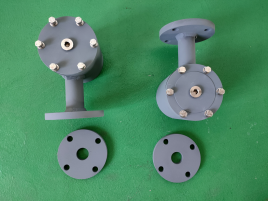
We also produce processing parts for ships, special-shaped sacrificial anodes and references.


Impressed current cathodic protection
Impressed current cathodic protection utilizes an external direct current power supply to install the anode at an appropriate position on the ship, such as the stern or the side of the ship, with the hull serving as the cathode. The current output by the power supply flows into the seawater through the anode and then reaches the surface of the hull, causing cathodic polarization of the hull and suppressing the corrosion reaction of the metal.
- Advantages: The magnitude and distribution of the protection current can be precisely adjusted according to the actual situation of the ship, providing excellent protection effect. The consumption of anode material is relatively slow and its service life is long.
- Disadvantages: It requires the installation of dedicated DC power supply equipment and control systems, resulting in high investment costs. The electrical insulation requirements for ships are relatively high, and the installation and maintenance are relatively complex.
Ship cathodic protection is a core technology for extending the service life of ships and reducing maintenance costs. It is necessary to select an appropriate solution (sacrificial anode or external current) based on the type of ship and the corrosive environment, and form a three-dimensional anti-corrosion system through "cathodic protection + coating + intelligent monitoring". With the development of green and intelligent technologies, cathodic protection for ships in the future will be more efficient, energy-saving and environmentally friendly, providing support for the sustainable development of Marine engineering.